Ovarian cancer has long earned a reputation as one of the most formidable challenges in oncology. Often called “the silent killer,” it is notoriously difficult to diagnose in its early stages because its symptoms—bloating, pelvic pain, and fatigue—are easily mistaken for less serious conditions. By the time it is identified, the cancer has often spread, and for many patients, the battle becomes even harder as the disease develops resistance to standard chemotherapy.
However, a glimmer of hope has emerged from an unexpected source. Recent scientific investigations into the therapeutic properties of cannabis have identified two compounds—THC (delta-9-tetrahydrocannabinol) and CBD (cannabidiol)—that show significant potential in inhibiting and even killing ovarian cancer cells.
The Power of the Plant: How THC and CBD Work
While cannabis has been used for years to help cancer patients manage the side effects of treatment, such as nausea and chronic pain, this new research suggests that its components might play a more direct role in fighting the disease itself.
The study focused on how these compounds interact with ovarian cancer cell lines. The findings were twofold:
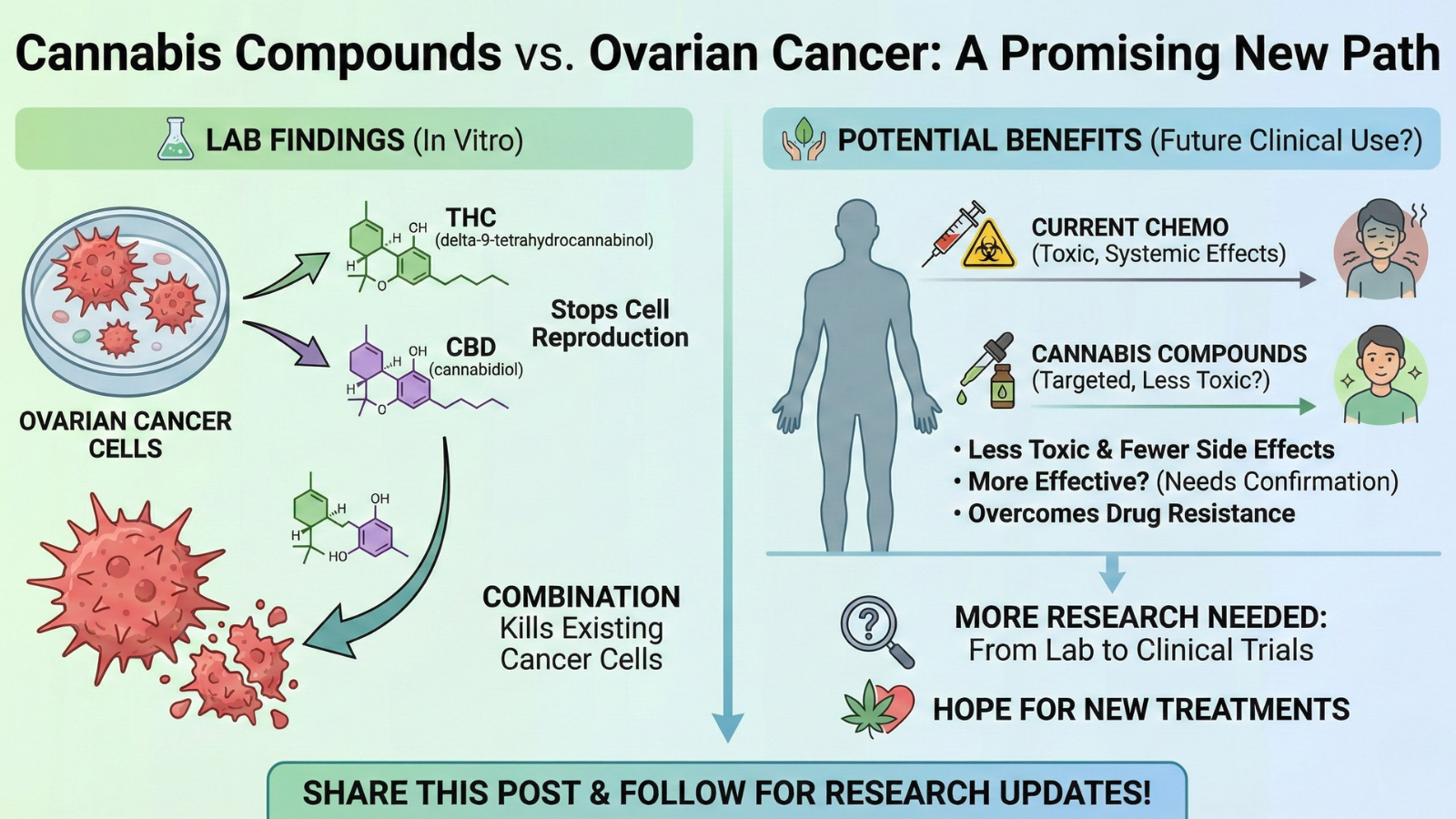
Halting Growth: Both THC and CBD demonstrated the ability to stop ovarian cancer cells from reproducing. In the world of oncology, this is known as “cytostatic” action—essentially putting the brakes on the tumor’s ability to expand.
Inducing Cell Death: Perhaps most excitingly, researchers found that when THC and CBD were used in combination, they didn’t just stop the cells from growing—they actually killed existing cancer cells. This process, often triggered via “apoptosis” (programmed cell death), suggests a synergistic effect where the two compounds are more powerful together than they are alone.
Why This Matters for Patients
The current “gold standard” for ovarian cancer treatment typically involves aggressive surgery followed by platinum-based chemotherapy. While effective for some, these treatments come with a heavy price: systemic toxicity. Chemotherapy is a blunt instrument that attacks both healthy and cancerous cells, leading to hair loss, immune suppression, and long-term organ damage.
The prospect of cannabis-derived treatments is particularly appealing because:
Targeted Action: Emerging data suggests that cannabinoids may target specific pathways in cancer cells that are less active in healthy cells.
Reduced Toxicity: If these compounds can be formulated into effective medicines, they could offer a treatment profile with significantly fewer debilitating side effects than traditional chemo.
Overcoming Resistance: Since THC and CBD operate through different biological mechanisms than standard drugs, they may provide a way to bypass the drug resistance that often leads to relapse in ovarian cancer patients.
From the Lab to the Clinic: The Path Ahead
It is important to approach these findings with a balance of optimism and scientific caution. The current results were primarily observed in a laboratory setting (often referred to as in vitro). While the results are statistically significant, the human body is vastly more complex than a petri dish.
Before these compounds can be integrated into standard care, researchers must conduct rigorous clinical trials to determine:
The Right Dosage: What concentration of THC and CBD is necessary to kill cancer without causing impairment?
Delivery Methods: Is the treatment more effective via targeted injection, oral medication, or another method?
Long-Term Safety: How do these compounds interact with other medications over an extended period?
A Potential Turning Point
We are still in the early chapters of this story, but the identification of THC and CBD as potential anti-cancer agents marks a significant shift in how we view medicinal cannabis. It is no longer just a tool for “palliative care” or comfort; it is being studied as a legitimate contender in the quest for a more effective, less toxic cure.
As research continues, these findings offer a new sense of possibility for patients and families affected by ovarian cancer. By turning to the complex chemistry of nature, we may finally find the key to silencing a silent killer.
Science is proving the power of cannabis in the fight against ovarian cancer. 🌿 Don’t navigate your health journey alone. Get expert guidance, professional support, and affordable access with Novus Cannabis MedPlan