


The Cannabis Industry Is Growing Up — And Small Businesses Are Feeling It
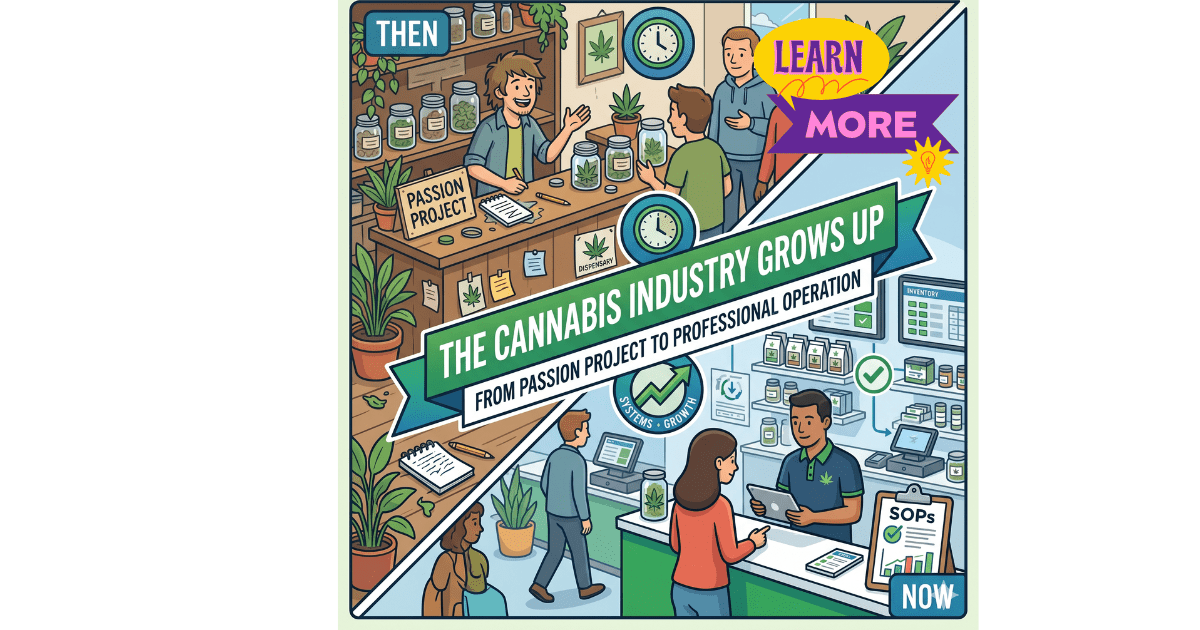
The cannabis industry is no longer a fringe, loosely organized market. In many states across the U.S., cannabis businesses now operate in tightly regulated environments with formal licensing requirements, detailed compliance standards, and increasingly sophisticated customers.
For small business owners, this shift changes everything. What once felt entrepreneurial and experimental now demands operational discipline, brand consistency, and strong management systems.
In Plain Terms
*Cannabis is moving from informal retail to structured operations.
*Compliance expectations are higher and more visible.
*Customers expect professionalism similar to other retail industries.
*Staff roles are expanding beyond product knowledge into business skills.
*Small operators who systemize early gain a lasting advantage.
From Passion Project to Professional Operation
In the early years of legalization, many cannabis businesses were built by enthusiasts. Deep product knowledge — strains, effects, cultivation methods — was often enough to succeed. Today, that foundation still matters, but it’s no longer sufficient.
Regulators now require detailed tracking systems, reporting standards, and inventory controls. Retailers must manage supply chains carefully. Branding has to remain consistent across multiple locations and platforms. Customer service must meet expectations shaped by other modern retail experiences.
Why Operations Matter More Than Ever
As the market matures, operational gaps become expensive. Inconsistent inventory practices can trigger compliance issues. Poor documentation can lead to penalties. Weak training can result in uneven customer experiences.
Businesses that thrive tend to focus on:
*Clear standard operating procedures (SOPs)
*Inventory accuracy and reconciliation
*Transparent communication with regulators
*Consistent in-store and online branding
These are not glamorous tasks. But they are the backbone of sustainable growth.
Retail Management Is Becoming a Discipline
Modern cannabis retail looks increasingly similar to other specialty retail sectors. Store layouts are intentional. Staff are trained to guide, not just inform. Upselling and cross-selling strategies are designed around compliance boundaries.
Customer expectations have also shifted. Shoppers want:
*Knowledgeable guidance without pressure
*Clean, organized spaces
*Accurate product labeling
*Consistent pricing
Small operators that treat retail management as a craft — not an afterthought — build loyalty in competitive markets.
The Expanding Skill Set of Cannabis Professionals
As the field becomes more regulated and competitive, job roles are evolving. Budtenders and entry-level staff who once focused primarily on product knowledge now often need stronger capabilities in inventory systems, compliance protocols, and customer experience management.
Those aiming for supervisory or management roles frequently develop these skills through hands-on experience, targeted training, and, in some cases, structured education that aligns with operational realities. For individuals looking to formalize their business knowledge while continuing to work, flexible programs such as an online business management degree — this might help — can complement real-world industry exposure.
For small business owners, this shift presents both a challenge and an opportunity: invest in your people, and you build a stronger operation from the inside out.
How to Build Structure Without Losing Agility
Small cannabis businesses often worry that “professionalizing” means becoming rigid. It doesn’t. Structure actually creates flexibility.
Here’s a simple framework you can apply:
A Practical Checklist for Owners
1. Document Your Core Processes
Write down how inventory is received, stored, and reconciled.
2.Audit Compliance Monthly
Treat compliance as an ongoing process, not a once-a-year scramble.
3. Train Beyond Product Knowledge
Include modules on customer service, documentation, and operational accuracy.
4. Standardize Brand Touchpoints
Align signage, tone, promotions, and digital presence.
5.Track Performance Metrics
Monitor sales per employee, shrinkage, repeat customers, and regulatory incidents.
Small businesses don’t need corporate bureaucracy. They need clarity.
FAQ: What Small Cannabis Business Owners Are Asking
Is the industry really becoming more competitive?
Yes. As more operators enter legalized markets, differentiation shifts from novelty to execution, service quality, and brand trust.
Do I need formal management training to succeed?
Not necessarily, but structured learning in operations, finance, or leadership can reduce costly trial and error.
What’s the biggest risk in staying informal?
Compliance failures and inconsistent customer experiences. Both can damage reputation and profitability quickly.
How can I compete with larger multi-state operators?
Lean into agility and local connection — but match them in operational discipline.
Learning From Adjacent Industries
One helpful strategy is to study how other regulated retail sectors operate. Industries like alcohol retail or specialty pharmacy have long navigated compliance-heavy environments while maintaining customer trust.
The U.S. Small Business Administration (SBA) provides practical guidance on business planning, regulatory awareness, and operational best practices for small companies across sectors.
Even though cannabis regulations vary by state and federal law remains complex, foundational business principles still apply.
The Human Side of Professionalization
Professionalizing the cannabis industry doesn’t mean losing its culture. It means pairing passion with process.
Owners who embrace structure often notice:
*Clearer communication
*Fewer compliance surprises
*Stronger brand recognition
*Higher customer retention
The businesses that endure will be those that treat cannabis not just as a product, but as a fully realized retail and operational enterprise.
Closing Thoughts
The cannabis industry is evolving from an emerging niche into a structured, performance-driven field. For small business owners, success increasingly depends on operational clarity, compliance discipline, and consistent customer experience. Those who invest in systems, people, and brand cohesion position themselves for long-term stability.
Capture Insured Cannabis Consumers in Your Territory—At Zero Cost.
Novus Cannabis MedPlan is the nation’s premier health insurance provider offering comprehensive medical and recreational cannabis coverage. Through our exclusive territory reimbursement model, we route our policyholders directly to your facility or brand with zero out-of-pocket expenses for them, and zero acquisition costs for you.
Lock in your territory today: Click Here


